Western Uusimaa wellbeing region sought international knowledge to refine its personal doctor model
The Western Uusimaa wellbeing services county (LUVN) is developing a personal doctor model to organize its primary healthcare more effectively than before. For this purpose, LUVN sought perspectives from Europe.
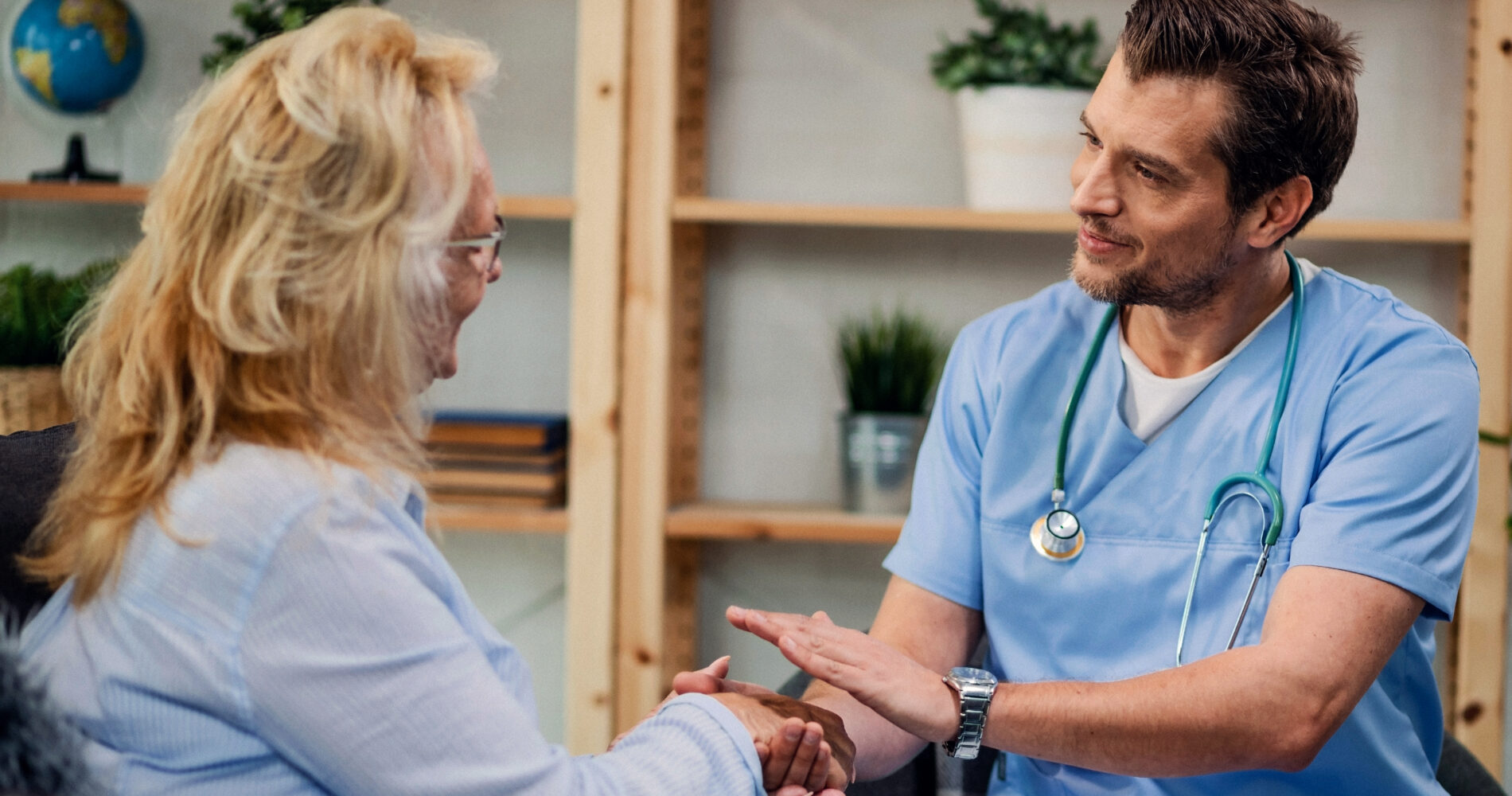
Wellbeing services counties in Finland are considering new ways to organize primary healthcare. One option is the personal (or named) doctor model, which is widely used in Europe. In this model, a doctor is responsible for a certain number of residents, together with a nurse. Depending on the doctor’s experience and the structure of the population under their responsibility, the number of residents can be, for example, 1,500–2,500.
Scientific evidence supports a long-term general practitioner-patient relationship because it improves the quality of care and reduces morbidity and mortality. This also reduces the need for and costs of health services, while increasing patient satisfaction. The personal doctor model is also popular among doctors.
Western Uusimaa wellbeing services county (LUVN) has been developing the personal doctor model since 2024. The first doctor and nurse work pair started in December of the same year. The experiences were good, so the county’s leadership decided in autumn 2025 to expand the model so that by 2029, every resident of Western Uusimaa will have a personal doctor.
LUVN is Finland’s second-largest wellbeing services county. Its population base is about half a million people, which is nearly one in ten Finns. More than 200 general practitioners and over 300 nurses work in primary healthcare in the wellbeing services county, and there are more than 20 healthcare centres.
LUVN is not building the new model solely based on its own ideas. The wellbeing services county sought information and lessons from European countries that have decades of experience with the personal doctor model.
“The operating environment in Finland is unique, but we can learn a lot from the practices of other countries—in places, even copy them,” says Tommi Uimonen, Service Line Director of Renewing Services for Social and Health Services at the Western Uusimaa wellbeing services county.
“The operating environment in Finland is unique, but we can learn a lot from the practices of other countries—in places, even copy them.”
Tommi Uimonen, Service Line Director of Renewing Services for Social and Health Services, Western Uusimaa wellbeing region
Interviews in the field
LUVN investigated European personal doctor practices together with NHG. The work resulted in a report that examined the personal doctor models of six different countries, including Denmark, Norway, and Estonia.
NHG sought views specifically from general practitioners doing patient work, not from administrative representatives. The best benefit of the survey for LUVN was its practicality and support for the project’s development workshops.
“NHG’s networks in the countries we are interested in are good, so the information we receive is valuable,” says Tommi Uimonen.
For the survey, a set of questions was prepared concerning the challenges and problems observed by professionals participating in the LUVN pilot. If similar issues were found in Europe, how were they solved?
“For example, if a doctor or nurse is absent for various reasons. Who takes their place? How is the substitution arranged? This allowed us to add very essential practical understanding for key personnel.”
Finland in miniature
The personal doctor model requires changes to the structures of the service system even before its implementation.
“Contact channels and their operation, goals and metrics, resourcing, managing population responsibilities, communicating new matters to the residents… The list is long. In practice, almost all operating principles of the healthcare centre must be reviewed and it must be considered whether the new model requires changes,” says Tommi Uimonen.
From a consultant’s perspective, the Western Uusimaa Wellbeing Services County is a very interesting client.
“LUVN is acting as a pioneer in developing solutions that have an impact on the development of the entire Finnish social and healthcare service system,” says Anna Maksimainen, Vice President responsible for public sector management consulting at NHG.
“LUVN is acting as a pioneer in developing solutions that have an impact on the development of the entire Finnish social and healthcare service system,”
Anna Maksimainen, Vice President Management Consulting, Nordic Healthcare Group
The nature of the wellbeing services county is such that others can also benefit from the practices it creates.
“Western Uusimaa is Finland in miniature, so we can test the model in various environments. There is multilingualism, elderly people, young people, city and countryside, and private healthcare service producers,” says Project Manager Heljä Karvonen from NHG.
After data collection, development continued in workshops. The lessons learned were summarized in these workshops and then utilized in the concept design of the personal doctor model.
“International experiences were only one part of the inputs gathered for the workshops, but they were important. There may have been strong preconceptions about some things, but then we had to think about them in a completely new way,” says Tommi Uimonen.
Project highlights

Challenge
Finding solutions to numerous problems in personal doctor operations identified in advance.

Solution
Seeking information about European personal doctor models and their features directly through the professionals’ own experiences and public sources.

Results
International experiences helped find solutions to the challenges and develop LUVN’s personal doctor model to suit local conditions.
Need support in developing personal doctor models? Get in touch